
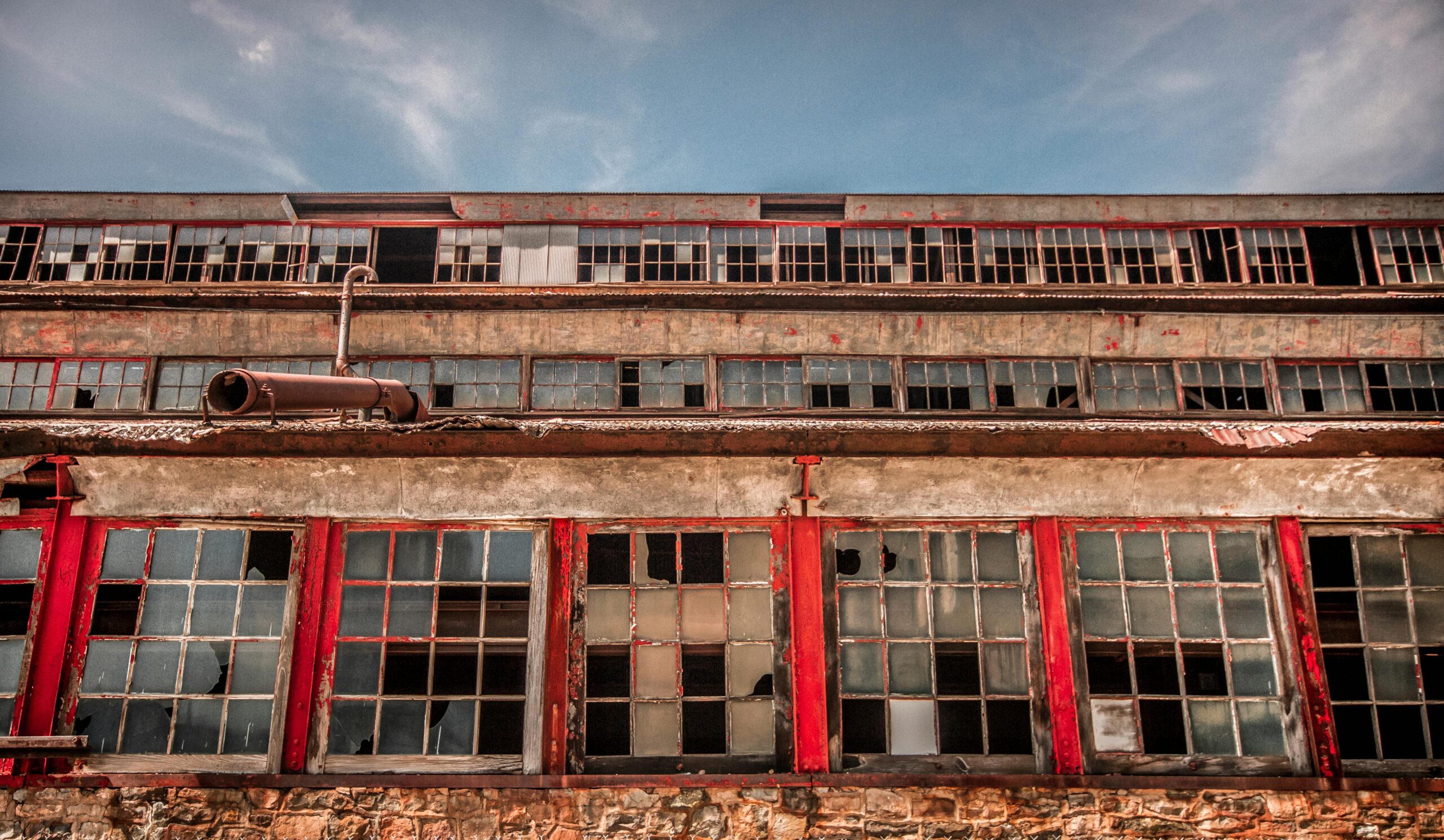
The way to work is behind the book factory. The parking is free for anyone willing to walk a few blocks to where the office buildings begin. Some days I see a woman up on the loading bay, leaning on the bricks and working at the pace of the morning light. She is there today, tearing covers from paperbacks and pitching each into a dumpster. She waves while smoking and tearing and pitching.
The back of the book factory stands on one of those industrial lawns too far from the public eye to warrant the regular attention of a grounds crew. I hike across it, up close to the wall. Now, in early March, the grass is as crisp and delicate as a field of hummingbird bones. It complies with the linearity of gray brick, but come summer the sow thistle and chicory will make fools of that geometry. All along the interior of the windowless wall reside the machines that assemble the stories that then are baled in boxes: thousands of pot boilers and bodice rippers bound for the pharmacies.
A freeway cuts through the sky, just a few pint bottles to the west. The cars soar over an abandoned lot and fill the air with their harsh hushings. They speed past the crest of an urban meadow swept round with last summer’s mown contours. Come dusk the final stars of winter will bead the power lines while all that soaring traffic will light the skyline like an attenuated and witless carnival.
In the morning sunshine, I find the grass bright with scattered homework and a hundred things that fly: wide-ruled newsprint bearing the shaky headlines of a child’s alphabet discovering itself, a bird painted on a broken kite, something between a parrot and a chicken, with glad beak and open wings. Actual wings, a sparrow’s, hung on the grass—just wings—paired and pointed like those of a Renaissance angel.
I round the corner of the book factory. Across a small side street stands a grade school for refugees. For two years a couple has lived out front of this school, parked on the deflated tires of their station wagon. By nightfall, theirs is the only car along the street. But in the morning, I find a dozen others already collected around them, always the same shuffle of bumper stickers which go on to pass the day quietly debating each other. The man keeps a few tools in a portable dumpster, and some days he spends a little time tinkering with different parts of the wagon. Some mornings the woman strides off with a handbag, moving in that purposeful way of a person going to work. Other times the two appear content to simply sit together in their front seat, reading books with the covers torn off.
Today, the woman is brushing out her hair while gazing pensively toward the avenue. I wave and she waves. The man is on his back beneath the car—tinkering again—one knee up, the other flopped over. His wrenches lie all around him, sparkling on the pavement. For all his efforts, the car has never moved, nor even started up. Whenever I see the man at his work, I’m reminded of a great cathedral in Ecuador which has been under construction for centuries. They say its completion will usher in the end of the world. The Ecuadorians, apparently, are in no hurry to finish. And God, for His part, seems content to wait, as each afternoon he shines through the open places, slanting a little beauty across the stones and scattered chisels of another siesta.
I leave the book-factory’s grass and reach the avenue. As I stand there before traffic, I find myself held a moment by the idea of that cathedral and a man at work on a thing he may never finish—held by the image of all those things the wind brings and then carries off, of grass on the way from crisp to green and back again, and of book after book brought together and taken apart, the unfinished story of us all.
Published in Orion Magazine | March/April Issue, 2007
Photo: “Joetography,” pexels.com
0 Comments