
All the untidy activity continues,/awful but cheerful. –Elizabeth Bishop
The Yellowstone River begins near the Continental Divide and roars down its famous rocks to the plains of eastern Montana. There, beneath a slower current its stones grow ghostly, then fad from sight. The farther east one goes—into the land of dust devils and watering tanks—the less one sees of the terrain and history that inspired our most celebrated park. Even so, these distant towns continue to hawk the memorabilia of grandeur, the closest with verve, the more remote with audacity, and those farthest away with a kind of mournful pluck. Those little dime stores selling glass wolves beside the shampoos are the off, off Broadways of the in situ gift shop.
These towns, of course, have parks of their own. You can spot them all over the country. Often, they border a river, or in absence of water, a farm field. Sometimes, this latter group offers little more than a few picnic tables in a wind belt. Yet they can be easeful places for the dreamy, coastal feeling they sometimes impart. Strolling, you find yourself at the park’s edge marked, perhaps, by a couple of wires bulked with bramble. Beyond, the landscape leaps to a grand scale: rows and rows of crops, the mesmeric redundancy of agriculture. A bee hovers, sways away. At such a place everything seems disposed to passage: the hush of high leaves, the crispy hissing of corn, the light that rides the wheat. There is a highway, one of those narrow secondaries slanting through the grain. Traffic is urgent and humorless. Cars knife past, trucks wallop the air, sending up pits of paper. If there are billboards, they promote fertilizers and Christ.
Of these parks, the ones I find most interesting hang along rivers. Most are named after a war, or a local benefactor, or the county within which they reside. But these parks are united less by name than they are unified by a particular atmosphere. How to describe it? A fug, lush and memorial, lascivious and slack. It is there beneath the water, in the silky gray snags bangled with sunfish; its’ in the gelatinous iridescence of channel mud and amid the haze of grill smoke slumbering in the willows. It’s an impression gathered of all the meaty orange paint of playground equipment and of the hearts and curses scratched into the shaded artillery. It is there in the threadlike grass that at the slightest pressure soaks the seat of your pants, and it lingers along every trail that finds no waterfall, no overlook, but merely dwindles away into a prehistoric melancholy of ferns and equisetum.
Only the ball field blazes with light. One might think this a relief from all that gloomy vitality, but it can be a disquieting brilliance, sternly insistent, like the gaze of an elder in an instructional dream. You might ponder it from the shadow of a tree, perhaps during one of those oddly narcotic reveries when you find your lungs swelling and unswelling restfully, each breath floating you deeper into a moment of unsolicited receptivity. Maybe this is what the apostle Peter experienced as he stepped over the gunwale toward his radiant goal. For an instant, as the storm raged, he must have understood the way that light and dark complement one another, the way that each is necessary to the other, and thus aware, have been able to appreciate beauty in the fullness of its terror and delight. How essential, then, that stark ball field to the lush shade that surrounds it. Here is what ignites an otherwise muted canvas; here is the spark of fruition; here, in the paradoxical words of Lao-tzu, is the emptiness that holds whatever we want.
So there is much to say about Riverside Park, where on my way east from Yellowstone I stopped to change my oil, and stayed the night. I signed in at the office, a little Alamo of a building that had yellowed to the shade of a smoker’s tooth. Registration in hand, I steered my truck to a clearing by the water. Cottonwoods swept up from the bank, shading clumps of burdock splattered with toothpaste spit. It was all Huck Finn down there, and I might have forgotten I was in eastern Montana were it not for the distant hills angled so waterlessly against the sky. This was the year of the big Midwestern floods, and the Yellowstone, too, was unusually swollen. Its middle spread clear to the edges;: a single surface sliding silently north. I changed my oil, pausing now and then to marvel at the force of that water, how it muscled against the bridge pilings, roiling swells as big as rowboats. A refinery lined the far shore, its various flames luffing in the full indolence of afternoon.
I’d been assigned to a clearing that I shared with a number of neighbors. Most were staying in shacks piled on the backs of trucks or in little ham-can trailers nosing the tails of low-slung Buicks. These vehicles looked too homely and clever to be the seasonal RVs of suburban families. Rather, they impressed me as the primary dwellings of a displaced or itinerant people. At least one trailer belonged to some carnies, an older couple who sat smoking sternly beneath a sign that admonished: ALL KIDS DESERVE A CIRCUS.
Riverside Park was festive with deserving kids. As I was pitching my tent, a huge Latino family drove onto the grass near some picnic tables. Their children broke from three cars and raced away, arms pinwheeling. A couple of teens slipped up from the river and made for the restrooms. Other kids, the ones who appeared to have been here a while, rattled in the bushes along the river, or played up on the trestle where trains slammed past at regular intervals.
My camp in order, I started for the restroom. It was a block of a building, featureless but for a lone bubbler slumping on a rust stripe. There was a door at either extreme, each offering two turns of a maze into the moist inner ear of the place. In the men’s room, I encountered the two teens who had slipped up from the river. Clearly, they’d been running the showers for some time. Water had fattened on the ceiling and steam curled about the fluorescent tubing. The first teen was crouched at the sink, scrubbing the filth from his cap. The second emerged from the shower stall, hitching up his slacks. He eyed me, timid and askance, then tiptoed toward a bench, crossing the black film on the floor. I was struck by the complex patterns that he soles of their feet had produced—dozens of weird blooms and vermicular smears. He sat on the bench and, with his shirt, began to rub his feet. The two reminded me of young men I’d met in desert train yards: skinny Mexicans in rayon shirts and battered dress shoes. Whom hobos call Streamliners. I went to the other sink, and the first teen glanced my way. He gave me a small beseeching smile, one that seemed to ask that there be no trouble between us. I winked at him.
Later, at my truck, I sifted through my books for something to read. That May, I’d packed dozens of books for my trip, more than I could read in ten weeks—indeed, in ten months: Emerson, Sophocles, Saint Paul, Mohammad, Whitman. Springtime always restores me to the audacious projections of childhood. In any case, over the seven weeks already past, I had read very little: a novel by James Salter and the less poetic Roadside Geology of Utah. The days, it seemed, filled quickly with driving and walking. My truck, thousands of miles from home, now had that dusty and settled look of the thoroughly traveled. It is a Japanese pickup, red and devoid of options.
Whenever I think about my truck, I am reminded of an essay by Barry Lopez, who writes that modern trucks don’t “have heart” like their older counterparts. By a vehicle “having Heart” I take him to mean that older vehicles, like his Dodge, have integrity because of their competent designs. They were built to work and last, and the momentum of tat good intention jumps the synapses between producer and produced, to survive independently in the created object. Surely Lopez is right in his observation that older trucks are more enduring than most of what comes off the lines today. But I don’t know that this means that the older vehicles are the only ones that have heart anymore. I’d argue that my pickup has heart—which I allow could mean nothing more than it’s a repository of my own sentimental affection—yet there were dawns when I paused to contemplate this multinational assemblage of disposable allows and damn if it didn’t seem absorbed in its own quiet pleasure, that of being a complex and self-contained thing.
In the end, I find it an interesting question, not whether modern or older vehicles “have heart,” but whether any human-made object per se can possess heart at all. Someone once told me that his question poses a real conundrum for certain Native American elders. Are there spirits in their sedans, and if so, what does it mean in terms of the way in which they ought to treat them? Not the sort of question I’ve encountered in my studies of traditional Western thought. The absence of such a philosophical query from general education has long left me unable to explain certain feelings I’ve had, as the inordinate grief I’ve felt whenever I noticed how heartlessly we discard our objects—the cars abandoned in swamps, the shopping carts upended in creek beds, the washing machines flung down embankments; it is a grief that transcends projection or sentimentality. It comes, I think from an intuitive awareness that we have too long regraded our machines and chemicals and tires and everything else as having no other purpose—no other identity—than one of crass utility.
I decided against reading any books at all. I shoved that crate of fine, dusty challenges in back with the lantern and socks. There was Riverside Park! I sat a while on the tailgate, swinging my legs and enjoying a moment of gladness that had swept over me. How good to be surrounded by so much varied activity, to be continuing my life at this place on a river by a refinery. What odd manner of happiness was this? How much more diverse a pleasure than the peace of deserts, the ebullience of mountains.
Perhaps the depth of this gladness finds its roots in a childhood memory. I grew up, after all, in a town full of river parks. When I was a boy my parents used to take my two sisters and me to a park called Duck Island. It was joined to the mainland by an aged concrete bridge. On summer evenings we would all walk out to its center and toss bread over the rail. It was fun, then, to watch the mallards on shore, the way the entire flock went up on its legs: a cranky, quaking whole plowing toward us. Soon they were swimming in the cavernous shadow of the bridge, making a delicious commotion. It delighted us to watch them to see the power of bread, the way it altered even the aloofness of ducks.
Those evenings with the ducks brought something more, at least for me—a sensation for which there is no single word in English, though the Brazilians call it saudade, which, as best I can translate, means something like “the exquisite sorrow one feels for the passing nature of things.” I felt some approximation of this on that bridge when I gripped the crumbling balustrade and peered into the dark water, or when I stared toward the remote and failing light among the trees—it came, saudade. The world, I had begun to see, was filled not only with enduring beauty, but also with countless reminders of one’s own passing. For years I took it as a cruel abundance.
After a while a whistle blew, the sound coming from far away and drifting over me like a sheet. I thought about walking toward the train to see it pass but I was of two minds, being so relaxed on the tailgate. I lay back on my gear. There was much time to decide.
When I awoke, the light had changed. People were seated here and there, eating in the long shadows of cottonwoods. The Latino family had moved from a circle of lawn chairs to a row of picnic tables. The river muck had assumed a cooler, shadowy smell and came mixed with the fragrance of smoky meat. The refinery rasped, went quiet. I strolled down to the water, past the carnies who were still at their chairs, smoking their evening cigarettes. The other side of their trailer admonished: MAY ALL YOUR DAYS BE CIRCUS DAYS!
At the trail by the bushes, a girl, maybe seven, confronted me.
“Know where this goes?” she demanded.
“To the trestle,” I said.
“Know what we found up there?”
I guessed a train.
“No,” she said.
She shifted her weight to one foot, preparing to speak. She touched the side of one hand to each of three fingers, bending each finger way back. “A flattened toad, a squished fish, and one snake that had blue eyes.”
“Blue eyes? On a snake?”
She nodded. “Cause he was shedding. You want to see our flattened pennies?”
We followed the trail to a beach under the highway. The air was chilly down there, the sand potted with footprints and littered with a few spent cans of Vienna sausage. The two teens, I imagined, had jumped a slow freight on the fly, hours ago. We paused to regard the current.
“The Yellowstone River,” I said, expansively, as if that summed up its complex geology. I glanced at my companion. “You know, just a few days ago I saw where it started.
“We can’t swim in it because of the undertow,” she replied.
At the trestle we met her brother, a small boy squatted quietly before several pennies—some flattened, others not. The tracks bore the look of a busy rail corridor. There was no grass in the ties; the rails gleamed on their bed of white cinder. The slopes, meanwhile, were a battered krummolz of blown weeds and shocked sumac. I squatted beside the boy, whistled at the train’s handiwork. A kind of atavism seemed to have been smeared into the coins: our republican slogans and numbers elided, Lincoln himself a ghostly distortion, his stretched face recalling the skull of a Pleistocene elder.
“Wonder where that goes?” I asked. The two children looked to where I was pointing, at the path that continued down to a marshy lagoon. The girl told me about the trails they’d found while hunting for firewood. Her brother listened, quietly correcting here on minor discrepancies.
I commented on their authority.
“We’ve been her for sixteen days,” the girl explained. “We’re the green trailer by your truck.”
“Our daddy’s a welder,” the boy said. “He works in Laurel.”
The two children looked off across the river and we all gazed a moment at Laurel. The sun hung round and orange above the refinery. We waited a while longer for a train, tossing bits of cinder at a tin can, but the tracks remained quiet. Perhaps the trains were done for the evening. I started back up the river., The girl followed, leaving her brother to sit with his pennies,. Two kayaks, each as a red a poppy, materialized from the bridge shadow. They swept past us with wonderfully productive ease, like commuters striding along a moving floor.
“Why do you have that notebook?” the girl asked me.
“Because I’m a writer,” I said.
“My sister Angela’s a writer,” she replied. “Yesterday I saw her sitting with her head flat on the picnic table, and I thought she was crying, but she was writing.”
We walked toward the green trailer. A big man wearing a pocket T-shirt was stoking a fire, while an older girl, Angela I presumed, was seated at the table slicing at an onion. Behind her, the sun was just touching the refinery; it made honeyed stripes among the trees and illumined her swollen hair. Her expression was one of a woman deep in bitter conversation with herself.
“We’re having a party tonight,” the girl said. “My daddy invited all his friends from welding.”
The big man looked up from his fire, noticed the two of us standing together.
“Candice!” he yelled. Get your butt over here. Now!”
I went over to my picnic table and lit a cigar. The Latino family had moved from their row of tables back to the circle of lawn chairs. A young woman in a van leaned toward the side-view mirror, brushing and brushing her hair. The sun was gone, replaced by a rubble of violet clouds; the refinery was beginning to star itself with lights. I could just make out the circus couple deep in the shadow of their trailer, their cigarettes two sparks, sometimes bright, sometimes not. The two kayaks had since gained the boat landing and the paddlers were unloading their gear into four neat piles. Both were handsome, silver-haired men; they looked like the sort who emerge from a cockpit to thank you for flying with them. One strode toward the office, while the other remained with kayaks, gazing out across the river. A few minutes later they gathered up their gear and moved off toward one of the more secluded sites.
When it was freshly dark, I dug through my stuff for a towel and razor. I did not go directly into the block building, but continued past it, across the ball field to a line of trees. There, above the canopies, the lights of a radio tower were gently swelling and unswelling. I had come to see them, the bug in me drawn to the glow, life’s oldest affinity. I’ve always liked radio towers. Even in the deepest wilderness, I do not mind the sight of two or three on the far black hills, winkling. I find, somehow, a welcome poignancy in that serene consultation of lights.
A small figure moved in the shadows, and the voice of Candice wanted to know what I was doing.
“Looking around,” I said. I pointed my cigar at the stars. I showed her the lion plunging into the west. I showed her Deneb in the constellation of Cygnus, my favorite.
She considered all this for a moment, then looked off to the north. I turned to see what had upstaged the galaxy. There were clouds out that way. They looked like misshapen lanterns, winking back and forth.
“Heat lightning,” she murmured, more to herself than to me. I wondered what thoughts were behind so introspective a tone. Had any words attached themselves to her well of feelings? Was it good or necessary that they did? We watched for a moment, and then I asked about the party.
She shrugged. “Only about half of the guys showed. Homer didn’t come. And neither did another Homer. There’s two Homers. And Crying Bob.
“Crying Bob?”
She nodded. “He didn’t come neither.”
We looked across the field toward the green trailer. A few men were seated around the fire pit, leaning toward its light. Closer by, the Latino family was folding up chairs and slamming car doors. From their midst came the deep luff and pop of a table cloth. My cigar was spend, and I stuffed the butt in my pocket. I grabbed the ends of my towel dangling at the my chest and nodded Candice toward the restrooms. The building stood conspicuously alone, singled out of the night by a dawn-to-dusk lamp. We walked toward the light, Candice continuing to list for me all the things she had found and everything she was still looking for around Riverside Park. We came to a stop at the restroom wall. High above, the lamp was pondered with insects, and in its brightness the sky beyond looked starless and very black. Candice slumped against the concrete wall, resting her tailbone against the flattened hands. For the first time in her restlessness, she struck me as small and vulnerable.
“What do you write about? she demanded.
I hesitated. “Well, details,” I said, at last.
She looked a bit frustrated, the way children do when they see that they are about to receive a long-winded answer to their simple question.
“Small things are what interest me,” I said. “Like those moths way up in that light. There’s a lot to say, just about them.” I went on , trying to find the words that might prompt her understanding. I grew more and more hopeful that through my enthusiasm she would glimpse my point. I tried to tell her, as Emerson had told me: “A leaf, a drop, a crystal, a moment of time, is related to the whole and partakes of the perfection of the whole. Each particle is a microcosm, and faithfully renders the likeness of the world.” And as I faltered on in this vein, scrambling to speak the precise words, I saw the fire of curiosity cool in her eyes. And therein, my awful Candice, is why I write.
Angela called out from somewhere behind the fire. Candice left me, tearing off across the grass. I went into the men’s room, found it empty, shaved a the gray-splattered sink. The light was bright yet cool, a buoyant fluorescence held in check by the ceiling. I studied my reflection, which as illumined in hues of lavender; the longer I looked, the more my reflection seemed to gather density and significance, the way an after-image takes shape following a blast of sun. I rubbed my chin, looked for the old man in myself. From so much gazing, my reflection began to look all bellowed and sockety—more otherworldly than old. The creature shrugged, then leaned close, blowing a cloud that hung before my face like one of Magritte’s apples. No one had used the showers for some time, and the evening air, I noticed, had dried the floor, fossilizing tin its black film the furtive activity of the transient teens.
Back at my tent I flopped onto my air mattress and listened to the noise over by the green trailer: raucous laughter, vigorous cursing, the hiss of cold ones twisting open. I as just beginning to doze when voice piped up just behind my head.
“What are you doing in there?”
“Now?” I said. “Looking at the ceiling.”
Angela wants to know if you have to go to school to be a writer.
“I don’t think there’s a law on it,” I replied.
“You going to stay in there?” she said.
I thought a moment. “I was wondering,” I said. “Why do they call that guy ‘Crying Bob?’”
“I don’t know,” she said.
I stabbed my legs into my jeans and hitched them up. When I came out I found Candice still sitting on the grass behind my tent. Again, the refinery rasped loudly—like a revving jet—then settled back into silence. The broad river slid across several blurred poles of reflected light. “Guess I’ll go take a last look at the water,” I said, tucking in my shirt. “You want to come with me?”
“Yeah,” she said, brightening.
I looked over at the green trailer. “Better check first with your old man.”
She hopped up from the grass and rushed off toward the fire; soon I heard her father rolling out a lot of loud, hard words. I never saw her again. Down at the water, I thought for a while about Candice, then gradually my attention turned to the place where I was standing. I touched the tall grass and looked up at the stars arranged in their timeless thousands; I found myself bored with them, with all their silent truths. Yet I kept staring anyway, pushing for a way in, though it never came, the relief of a restorative kinship—only the sour press of my impatience. I recalled, with irony, all those rushed moments at home when I’d glimpsed the stars, or perhaps a rising moon, and admonished myself, “When I go traveling, I’ll have time to truly appreciate that.” Now, of course I was traveling, was in the very imagined moment, yet could not must the desired affinity. I knew enough, at that point, to quiet and walk away.
On the art of capturing the elusive, John Steinbeck draws an analogy from science. He describes the folly of trying to coax a particular species of marine worm onto a blade. So delicate is this worm that any prodding on the part of the biologist—no matter how deft—merely tears it to bits; instead, the biologist can only present the knife to the creature and then wait for it to ooze unassisted onto the steel. I’ve found that my attempts to contrive a spiritual moment operate just like the blade, prodding to bits any delicate affinity whose delights can only be granted by Providence.
Sometime later, the welders at the green trailer got int their trucks and left. Their campfire had settled low, its unseen coals glowing against the inner curve of the iron ring. A gag of onions lay on the table, and plates, cups, and beer bottles. In the distance, the lawn chairs under the circus trailer stood empty. Before turning in, I took a stroll past the pavilion, past the trees where the kayakers were camped. Each man had his own tent; they lay side by side, the same and separate, two long cocoons until morning. I went to the edge of the unlighted ball field, remained there for a moment with nothing in mind.
Come morning I was up before dawn. I leaned on my truck bumper, sipping coffee in the glazy dimness. A rabbit nosed about on the wet grass. Just as sunrise was imminent, the caretaker heaved off the porch, buckling his pants. Big bellied, he limped through the trees and left ragged footprints across the dew. In the middle of the ball field, he stopped. He coughed and hacked, brought a match to his lips. At ease now, he surveyed all the trailers at rest in the shadows. He was all lighted up.
Published in Orion Magazine | Spring, 1996
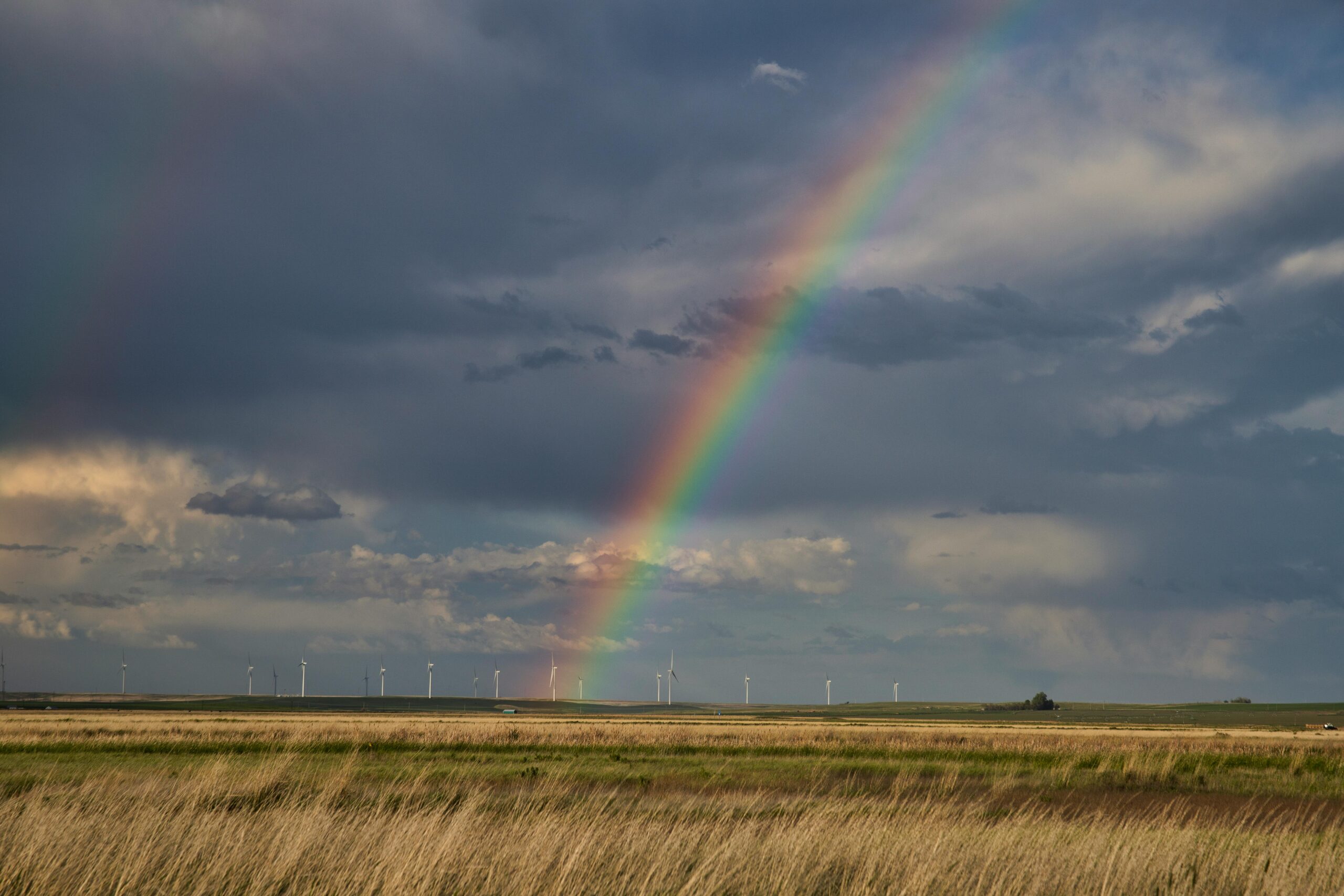
Photo: Dick Hoskins, pexels.com
0 Comments